|
 |
 |
 |
 |
 |
|
São Paulo is a huge city, with sprawl. It
was a merely a transfer point for this tour. |
Tall, rather bland buildings cover the area. |
Like Los Angeles, the city goes on and on. |
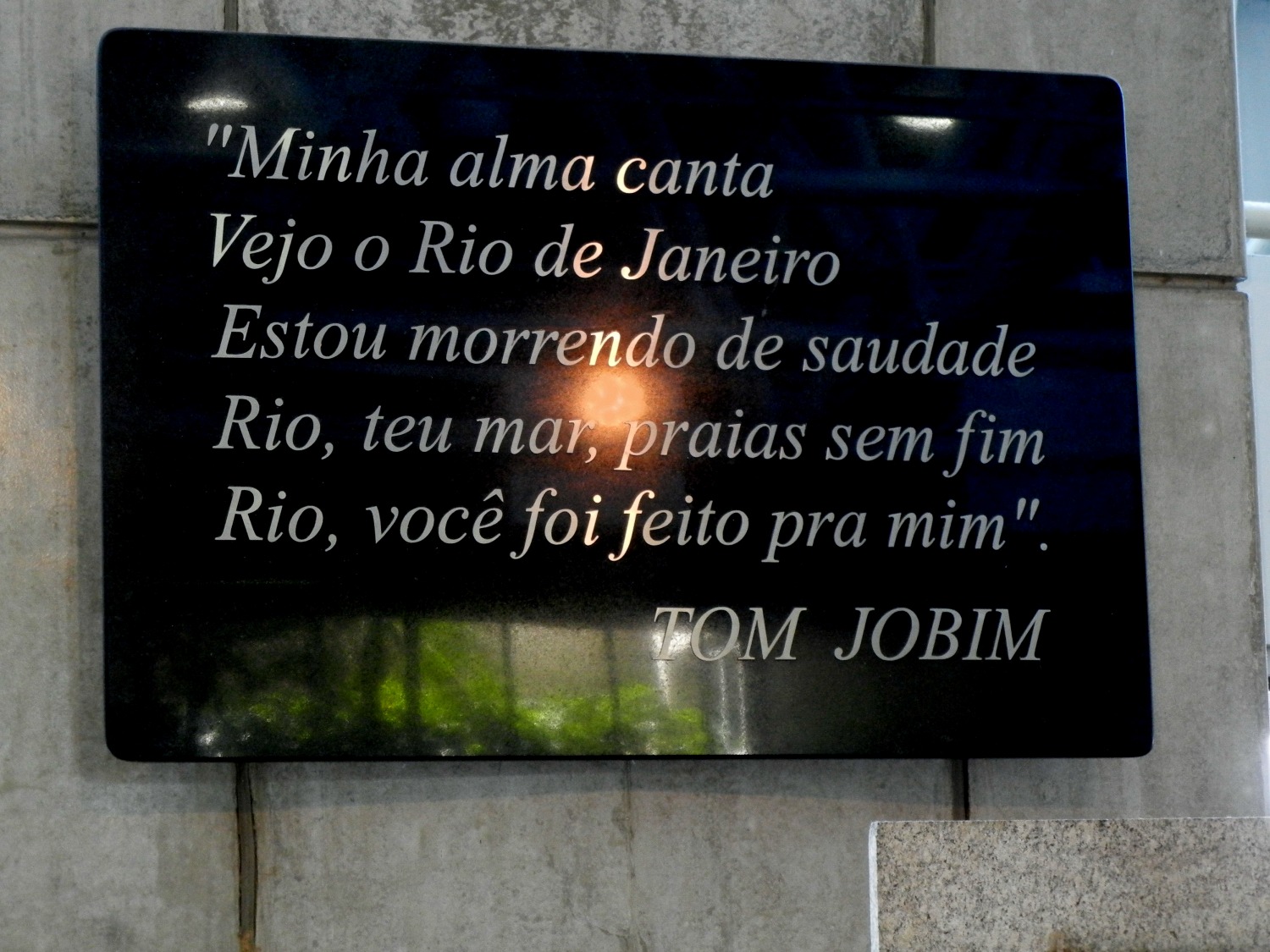
Rio de Janeiro's airport is named for
Galleon Beach, the site of the airport where in 1663 a galleon was
built, and popular bossa nova composer Jobim. Very cool, like our having
Duke Ellington appear on a United States coin. |
Rough translation from his song Samba do
Avião (1962):
My soul sings
I see Rio de Janeiro
I am dying of longing
Rio, your endless beaches
Rio, you were made for me. |
Copacabana's Atlantic Avenue is lined with
modern and old hotels and restaurants that face the beach and ocean. |
 |
 |
 |
 |
 |
 |
|
Mosaic decorations are found on sidewalks
throughout the city. |
Beach volleyball installations are found
along the sand. Ipanema is the next
district, but smaller and less attractive and cared for; howerver,
adjacent further is Leblon, an upscale district with the Rio Design
Center mall. |
Our hotel, just a block from the beach. The
small 5-person taxis, which run on natural gas, are everywhere, similar
to New York City, and likewise, a few drivers take advantage of
tourists. |
Shopping Cassino Atlantico is not a
regular mall but a center featuring art and antique boutiques.. |
Another view of the
central atrium. |
The best gallery here is
that of Marcia Barrozo do Amaral, which when visited was showing the
wood art of João Carlos Galvão (born 1941). |
 |
 |
 |
 |
 |
 |
|
Another view of this construction. My father
Philip, a woodworker and artist, would have admired it.. |
Among Galvão's many works (found on the internet,
too), this is the most stunning. |
Front view. |
Another painted and stained variation. |
A third example of his appealing geometric
reliefs. |
An oblique view. |
 |
 |
 |
 |
 |
 |
|
Our next destination was the famous and
outstanding Jardim Botãnico. |
The large park is filled with tropical
specimens. |
Close up view of the flanged trunk of a huge
tall tree. |
Seed pods of a thick vine wrapping a tree. |
Very tall and thin palms. |
A conical tree with fan leaves. |
 |
 |
 |
 |
 |
 |
|
A pleasant walkway. |
A pond with water lilies. |
A trio of palms arise from the pond bed. |
Burmese bamboo. |
Thick temple bamboo. |
In the orchid pavilion. |
 |
 |
 |
 |
 |
 |
|
A carnivorous plant. |
Pitcher plants deadly to insects. |
The center fluid will kill and digest any
visiting insect. |
A fan-leaf tree. |
Detail view. |
A large-leaf tree. |
 |
 |
 |
 |
 |
 |
|
Strolling. |
Another path. |
Overlooking the garden and all of Rio is
Cristo Redentor. |
Close-up view. |
The Rose Garden, but hardly any roses. Left
view. |
Right view of the concentric section. |
 |
 |
 |
 |
 |
 |
|
Bird of Paradise, one of the varieties of
the plant. |
More distant view. |
The tiny, funky Japanese Garden.. |
Sign: Garden of Rest (inactivity) |
Near the Jardin Botãnico are several
galleries and an art school or collective. The wall graffiti is
certainly more artistic than customarily found in the East Bay. (Photo
by D. Berland.) |
At the Anita Schwartz Gallery in the Gávea
district we
encountered the fascinating work of Carla Guagliardi (born 1956), who
resides in Rio de Janeiro and Berlin. |
 |
 |

|
 |

|
 |
|
This hanging construction filled the
entire gallery room. |
Steve Biggs give scale and
position of the art form. |
Another but
non-overlapping section of the composition. |
Guagliardi's wall sculpture. |
Oblique view. |
Something for the floor. |
|
 |

|

 |
|
Hangings of the stairwell. |
This could be a found object (but isn't) folded and
mounted in interesting fashion. |
At the Silvia Cintra gallery we were
enchanted by Nelson Leirner's 100 Monas. The maverick and protest artist
(born 1932) had fun dressing up the icon image in a linear display that
covered the walls of the small gallery. These are but four of the 100. |
 |
 |
 |
 |
 |
 |
|
A restaurant near the galleries served good
food, but they had difficulty in determining our bills — compounded
charges. |
In the afternoon, we took a tourist jitney
up Corcovado with objective of Cristo Redentor. We stopped a vista
point. This quasi panorama at
wide-angle shows the coastal spread of the city. |
 |
 |
 |
 |
 |
 |
|
A slight close-up. |
Rio's second, domestic airport on filled-in
land, Santos Dumont. Planes must rise fast and veer left when taking off, else hit a
mountain. |
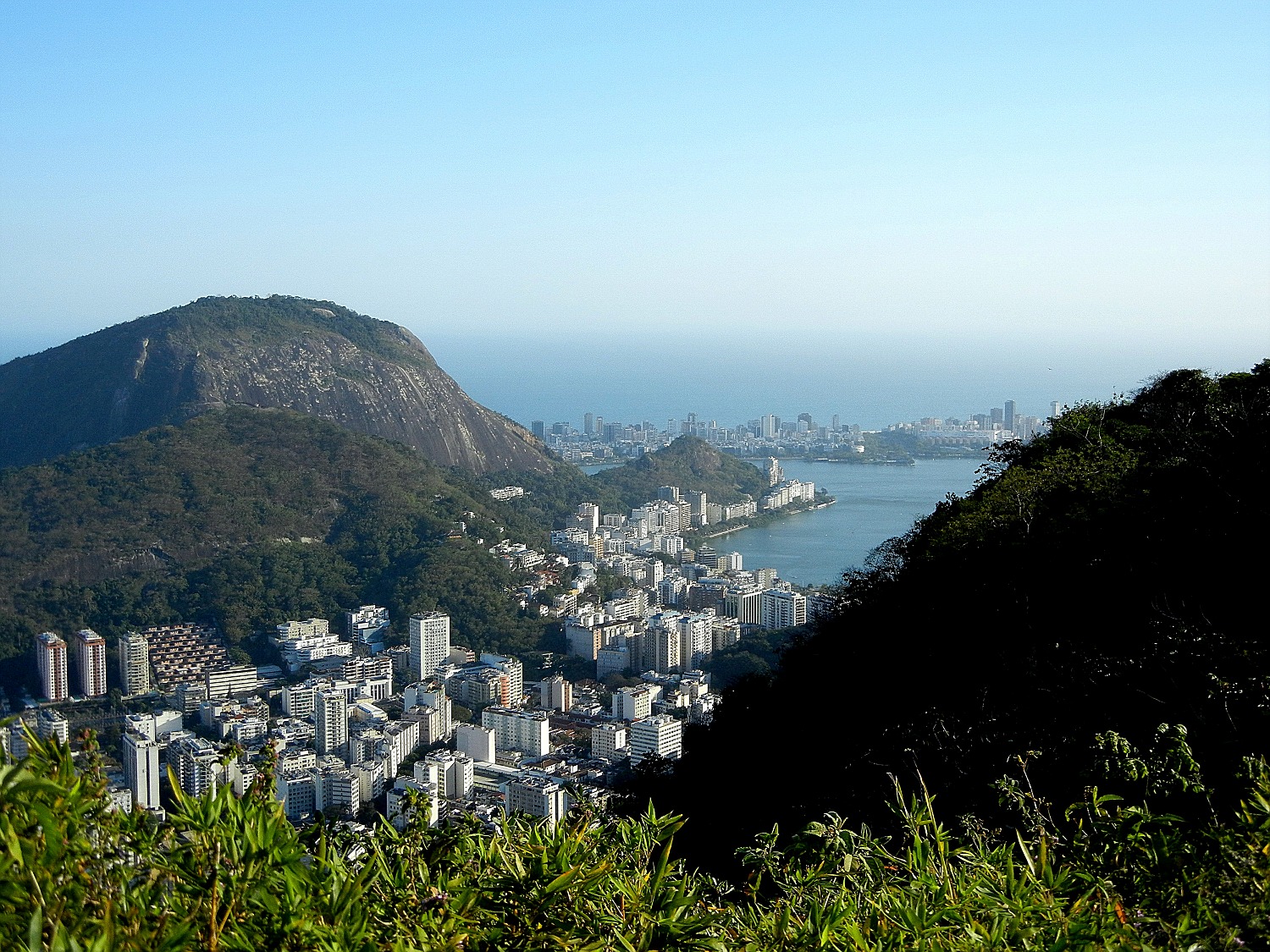
Lake Rodrigo de Freitas and Ipanema from the
back. |
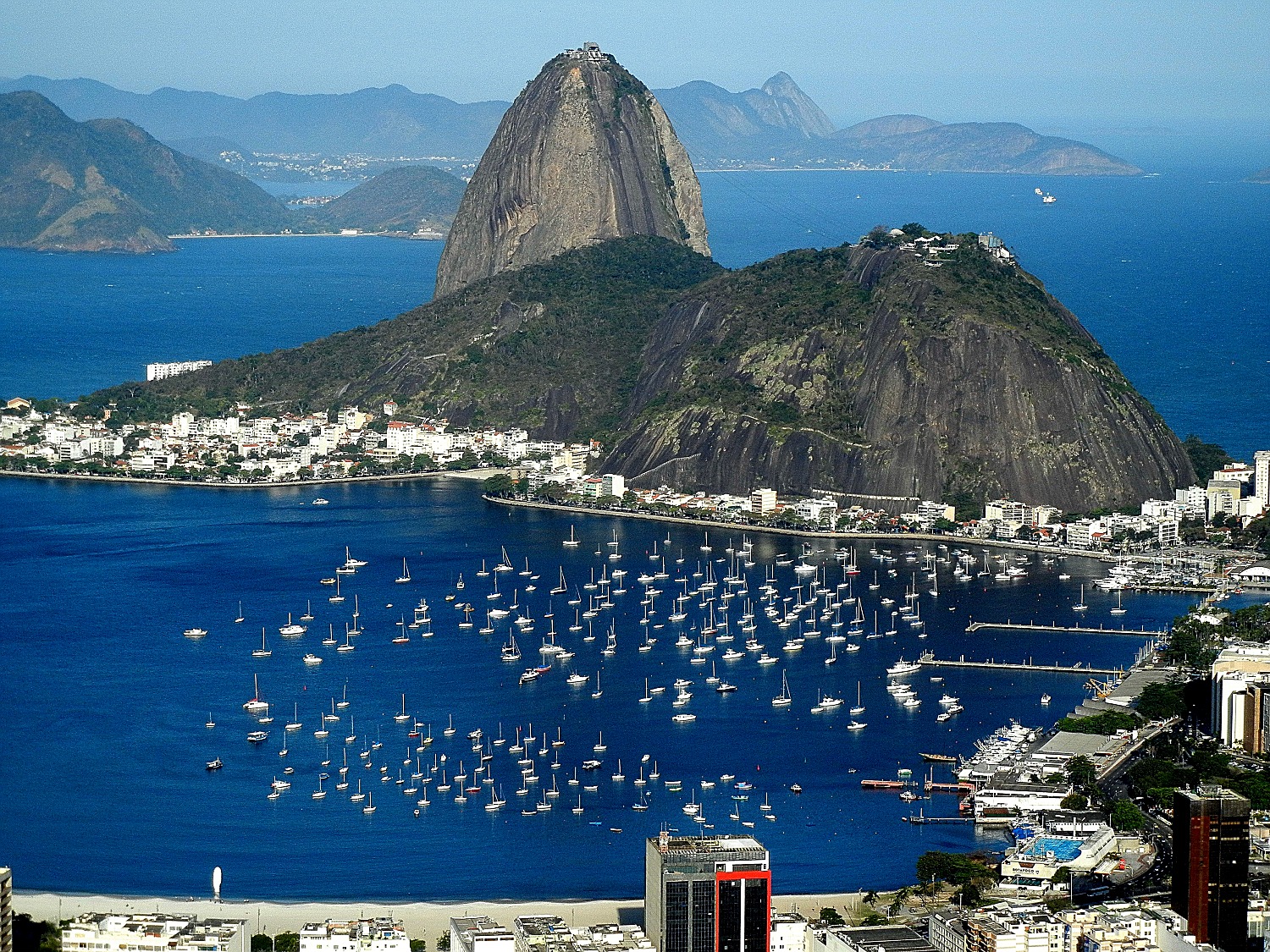
Sugar Loaf and Botafogo Bay. |
Close-up. The park near the center left is
named Parque Yitzhak Rabin. |
Some details of city buildings. |
 |
 |
 |
 |
 |
Smooth subway below,
chaotic traffic above,
Christo above all.
|
|
Another view from the height. |
Urban scene. |
Lake, isthmus ,and ocean. |
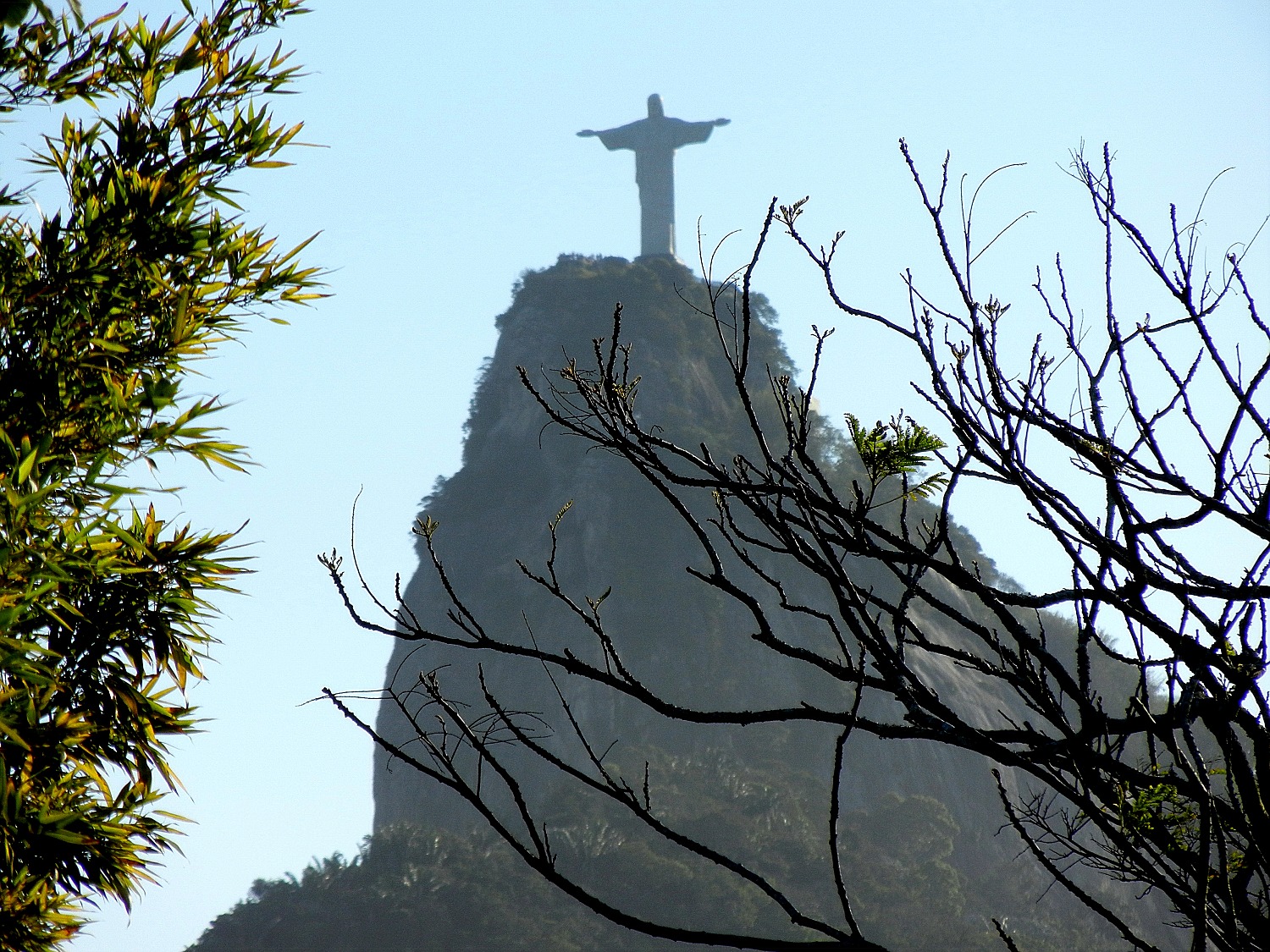
Cristo Redentor. |
At the base of the statue. |
My haiku. Go to my rèsumè page and haiku & addenda for
more. |

|
At the São Paula Airport awaiting our
flight to Rio de Janeiro, I met members of Jammil , an Axé and MPB band,
and had a very brief conversation. They presented me with a DVD album,
which when I returned home, found it to consist of an excellent, fun
anthology of music videos of their recent songs as well as an extensive
travelogue of the gold road from Paraty and Cunha to inland cities. The
album release of these songs is a finalist for a 2012 Latin Grammy. |
|
|
|
|
|
© 2012 Debra Jan Bibel |
|
Return to Index |
Next:
Rio – Day 2 |
|
Appendix: Food |
 Music / Choro: Cochichando [Mike Marshall & Choro
Famoso/ Adventure Musics]: 3 min excerpt
Music / Choro: Cochichando [Mike Marshall & Choro
Famoso/ Adventure Musics]: 3 min excerpt