|
 |
 |
 |
 |
 |
|
Taken on a later day, this photo is of
the broadcast antenna which lords over the city. |
Dividing the city is the river Mtkvari, or Kura, the right tributary of
the Vere. Millennium Hotel stands out. |
Building for governmental public services. |
The Presidential and Administrative building; not the flag of Georgia
with scarlet cross with four bolnur-katskhuri crosses in the corners. |
An exhibition hall, originally planned as a concert hall. |
One of the bridges across the Kura. |
|
 |
 |
 |
 |
 |
 |
|
Civic Center. |
Overlooking the river is
the Metekhi Church of Assumption |
Entrance to the Church. |
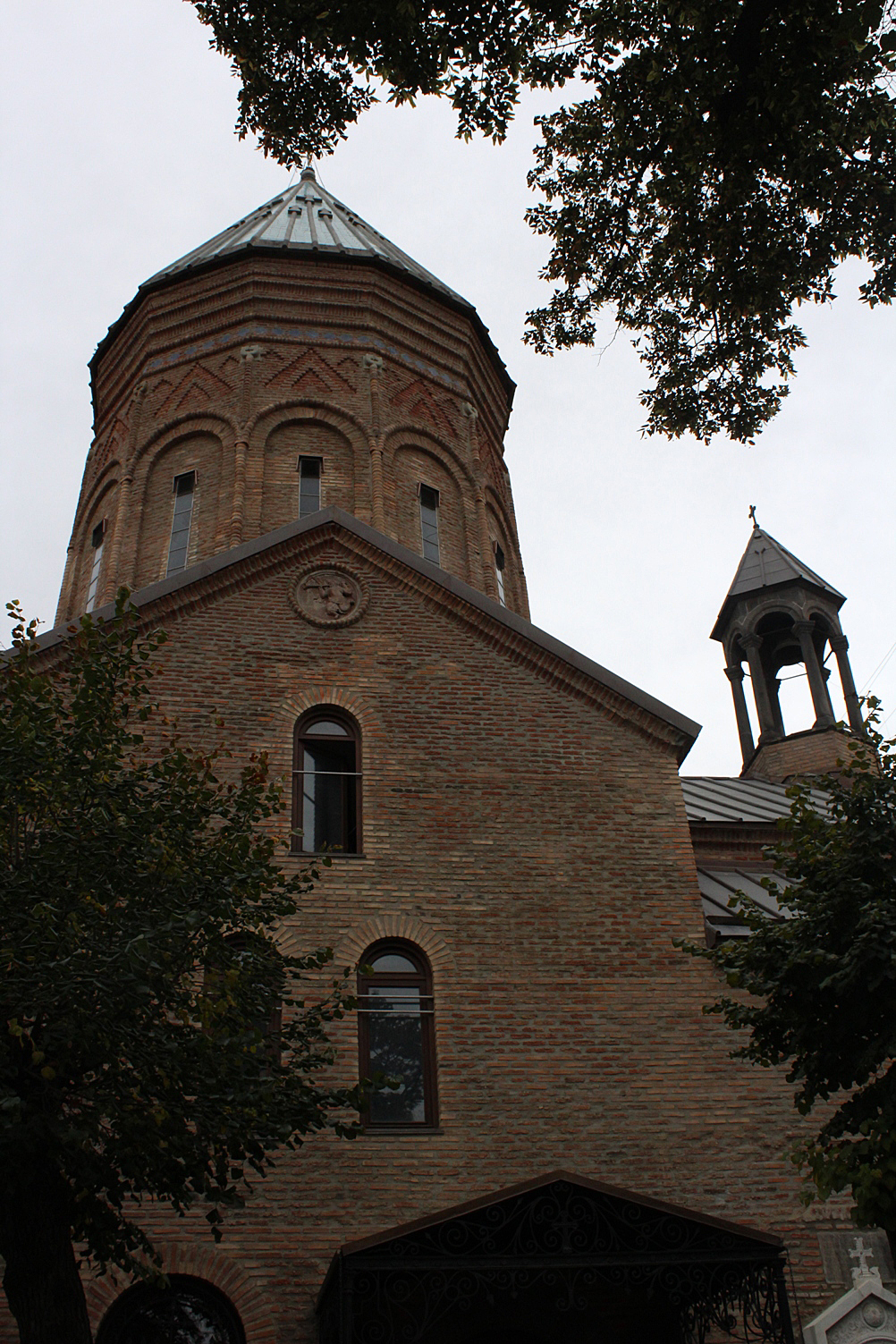
Looking upward. Georgian
and Armenia Orthodox Christian architecture has a conical roof; Roman
Catholic churches have a half-spheroid dome; Russian Orthodox has an
onion-shaped dome. |
Inside the sanctuary. |
Prayers. Tradition
quirks: In
Georgian churches, women must wear skirts and men must be bare-headed. If
women lack a skirt, wraps are provided to be placed around pants. |
|
 |
 |
 |
 |
 |
 |
|
Ringing the bell. |
Monument to King Vakhtang Gorgasali,
440-502 BCE, founder of Tblisi. |
Located adjacent to Metekhi Church, the
statue views all of Tblisis. The huge Sameba Cathedral with golden roof
is in the distance. |
Across the river is the ruined walls of the
Narikala Fortress, 4th century; restored St. Nicholas church is nearby. |
Another statue overlooking the city is
Mother of Georgia, Kartlis Deda, made of aluminum in 1958, celebrating
1,500 years of Tblisi. |
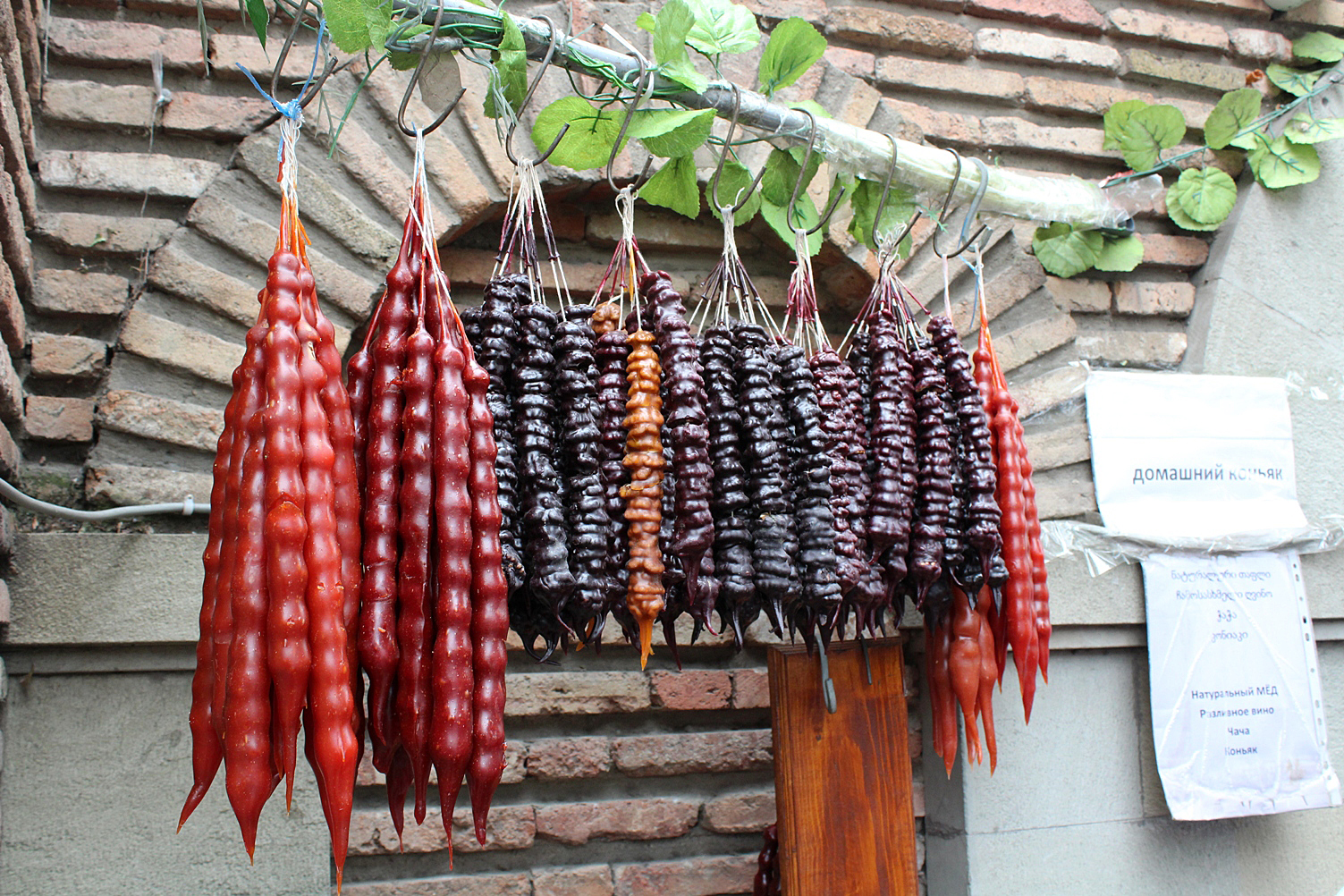
Churchkhela: These are not candles but tubes
of nuts (almonds, walnuts, or hazelnuts) coated with grape or other
fruit juice and flour and dried. |
|
 |
 |
 |
 |
 |
 |
|
An excavation with wine urns. |
Old wine distillation from the excavation. |
Hamman [Turkish bath] spas; a sulfurous hot
spring adjacent.: |
Several spas; some had massages
here. |
The spring and mosque. |
Some ornate balconies. |
|
 |
 |
 |
 |
 |
 |
|
The Great Synagogue of
Tblisi. Jews have dwelled in Georgia since the Babylonian exile.
Most have moved to Israel but 11,000 remain in the city. |
The tablets of the Commandments serve as doors in a gate. |
The rabbis of the past. |
Plaque in Hebrew, Georgian, English, and Russian. |
Inside the synagogue. The almemar/bema and ark. |
Jewish symbols above the doors. |
 |
 |
 |
 |
 |
 |
|
Modim [we thankfully acknowledge]. |
Ark; the Torah within. |
This section at the left side,..... |
.... behind the divider, is the women's
section. As in mosques, orthodox synagogues separate the sexes, but here
women cannot see anything. Typically, they would be seated in the
balcony. |
The history of the
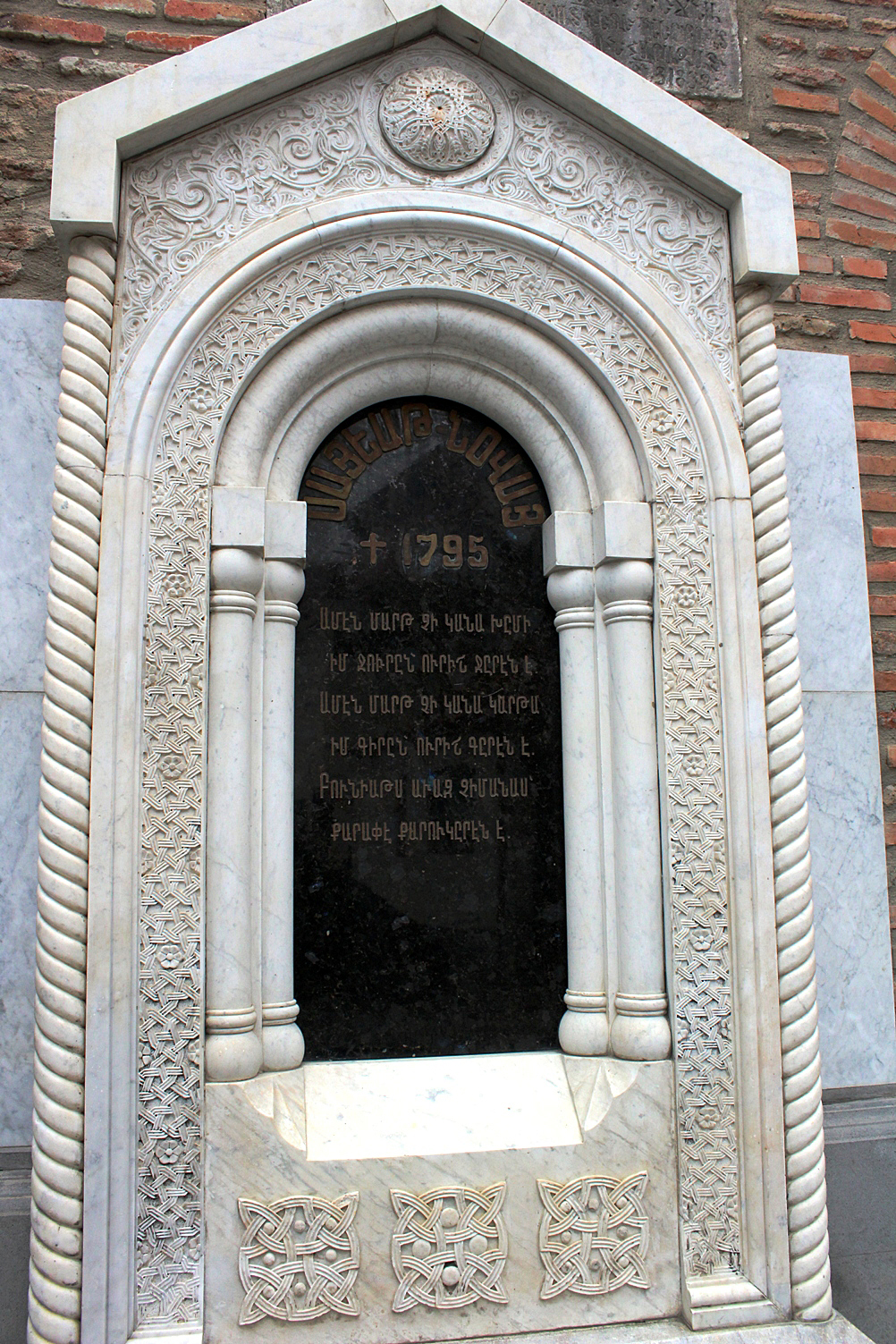
Sourb Gevorg [Saint George]Armenian cathedral. [see enlargement] |
Entombed here is the Armenian
poet-composer Sayat- Nova. The monument here has an error, as he played
the kamanche spiked fiddle not this fantasy, a 5-string fretless saz or
tanbur. |
 |
 |
 |
 |
 |
 |
|
St. George cathedral. |
Light from the dome. |
The altar. |
Dedication plaque. |
The bishop, Yuval, and Norik. After a recitation of a poem by Sayat-Nova
and Norik's duduk performance, the priest sings beautifully. [Video has
been made for DVD collection] |
Dinner. A wall of wine. |
 |
 |
 |
 |
 |
 |
One of Georgia's traditional foods, khachapuri, cheese-bread. Another
traditional dish is tomatoes and cucumber. |
These dumplings are khinkali, usually filled with meat. |
After dinner we pass this modern building, a hotel. |
First contact: we meet the Didgori Ensemble, traditional Georgian vocalists of
polyphony. |
Yuval and his counterpart director discuss a matter. |
Tour members listen to the singers. |
 |
 |
|
|
|
|
|
After the Georgians rehearse, the Yuval Ron Ensemble presents. |
Norik closes
the gathering. [This gathering was video recorded for DVD collection.] |
|
|
|
|
|
|
|
|
|
Return to Index |
On to Tiblisi-3 |