 |
 |
 |
 |
 |
 |
|
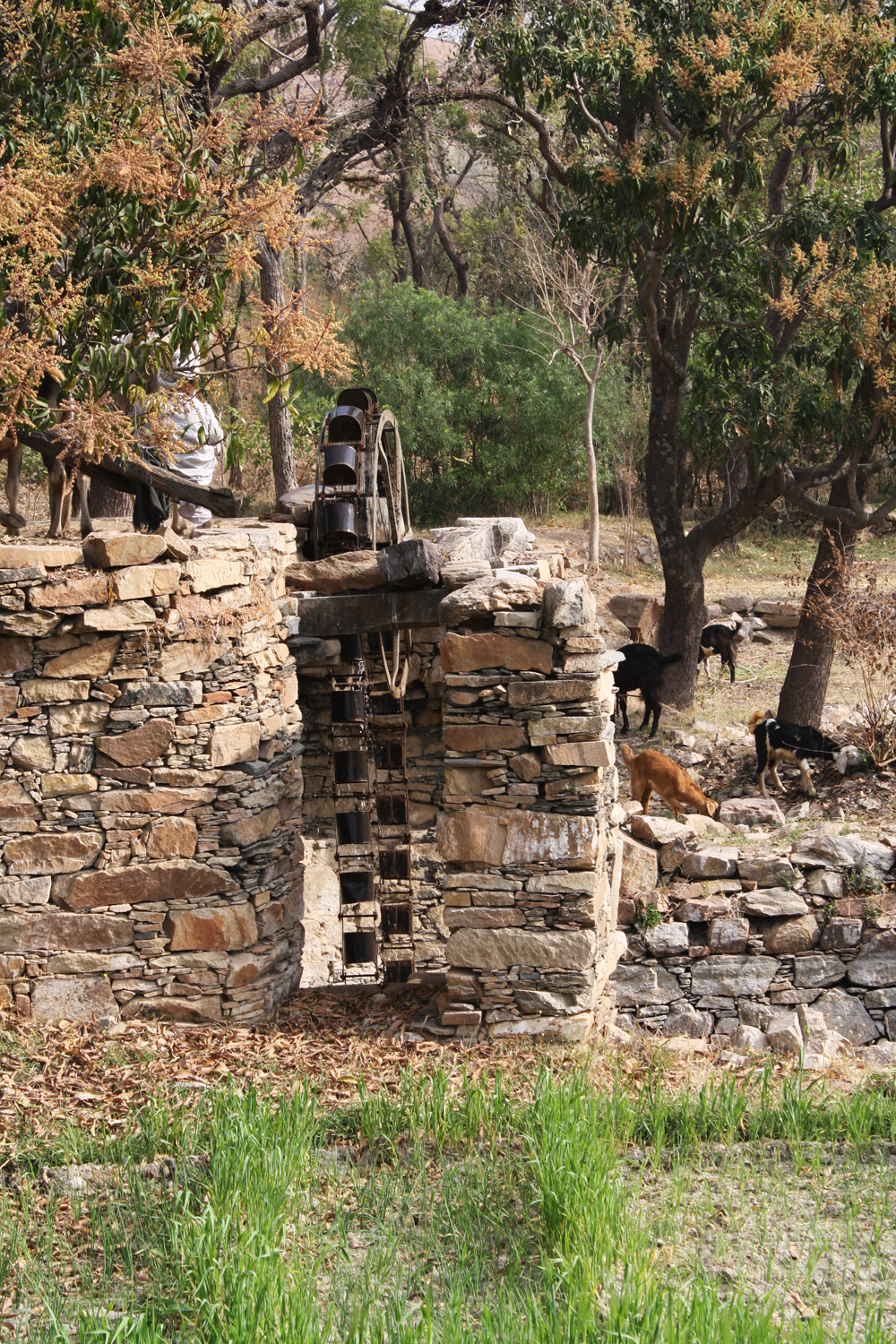
As we proceed into the Rajasthan desert zone, we encounter an ancient agricultural invention, the noria or waterwheel. |
Round and round go the cattle, and gears rotate the noria to lift the water. | The farmer rides the apparatus; his mind happily distracted by us visitors. | The well water permits cleaning of laundry. | Detail of the lifting mechanism as goats look on. | A crop of grain. |
|
|
|
 |
 |
 |
 |
|
A drying river bed indicates the arid landscape. |
Scrub and shrub. |
Approaching the village; piles of drying grain. |
Interesting decoration of symbols and text. |
Just a nice image with celebratory flags. |
Into the village. |
|
|
|
 |
 |
 |
|
| A small village shrine with its puja bell. | In the corner of the shrine some small nagara drums. | A music machine: a crank plays the drums and metallophones. A dhol drum is at the side. | The diety Sarasvati, player of the veena. | The shrine alcove. | Musicians with harmonium, dholak, and tambura drone. |
 |
 |
 |
 |
 |
 |
| The Terah Taali dancers, whose choreography duplicates devotional dance. | Manjira bells. Besides those held in the hand, the leg has a graduated series of bells that are struck during the elaborate dance moves. | The three dancers. [credit:Andrea Vasconellos] | Floor dancing shifts to standing. | The dance and music entices. | Silan is recruited. |
 |
 |
 |
 |
 |
 |
| She quickly follows the movements. | Mother and brother approve. | Father Yuval agrees. | Sajida, a trained dancer, joins the party. | Others enjoy the moment. | A circuit of the village commences. |
 |
|
|
 |
 |
 |
| Homes are constructed of fitted stones. | A small Hindu shrine. | Water buffalos. | A painted bovine. Cows are holy and never eaten. Kept for milk until no longer productive, cows are then retired to the streets, where people provide food. | Two villagers with water pots. |
Schoolgirls. Blue uniforms indicate a government run school. |
 |
 |
 |
 |
 |
 |
| Goats are common livestock. | Nearby is an elongated lake. | Water buffalo in water. | Our tour bus. A Volvo, it provided comfort. | Monkeys stake out bends in the road for handouts. | Entrance to the Jain temple. The rhombus is symbolic of Jainism. |
 |
 |
 |
 |
 |
 |
| A side entrance. | Jains take an extreme stand on life forms, concerned in not even accidentally killing an insect. | Of course, the religion was created without knowledge of mosquito, tick, flea, and fly vectors of infectious disease. Jainism is a minority religion in India. | Upper stories. | Entrance step detail. | A conch decoration at the entrance stairs. |
 |
 |
 |
 |
 |
 |
| A temple of columns, each different in decoration. | Four sections with a central square. | Stunning light and dark shadows. | Around the courtyard. | Monkey decoration. | An intricate dome ceiling. |
 |
 |
 |
 |
 |
 |
| Column details. | Another angle. | Another dome. | Elephant and riders. | A different elephant and riders. | An old, old tree within the temple. |
 |
 |
 |
 |
 |
 |
| Footsteps of a saint. | Into the sky. | Table upon table upon table. | Column base decorations. | The architect and ruler. | Another column. |
 |
 |
 |
 |
 |
 |
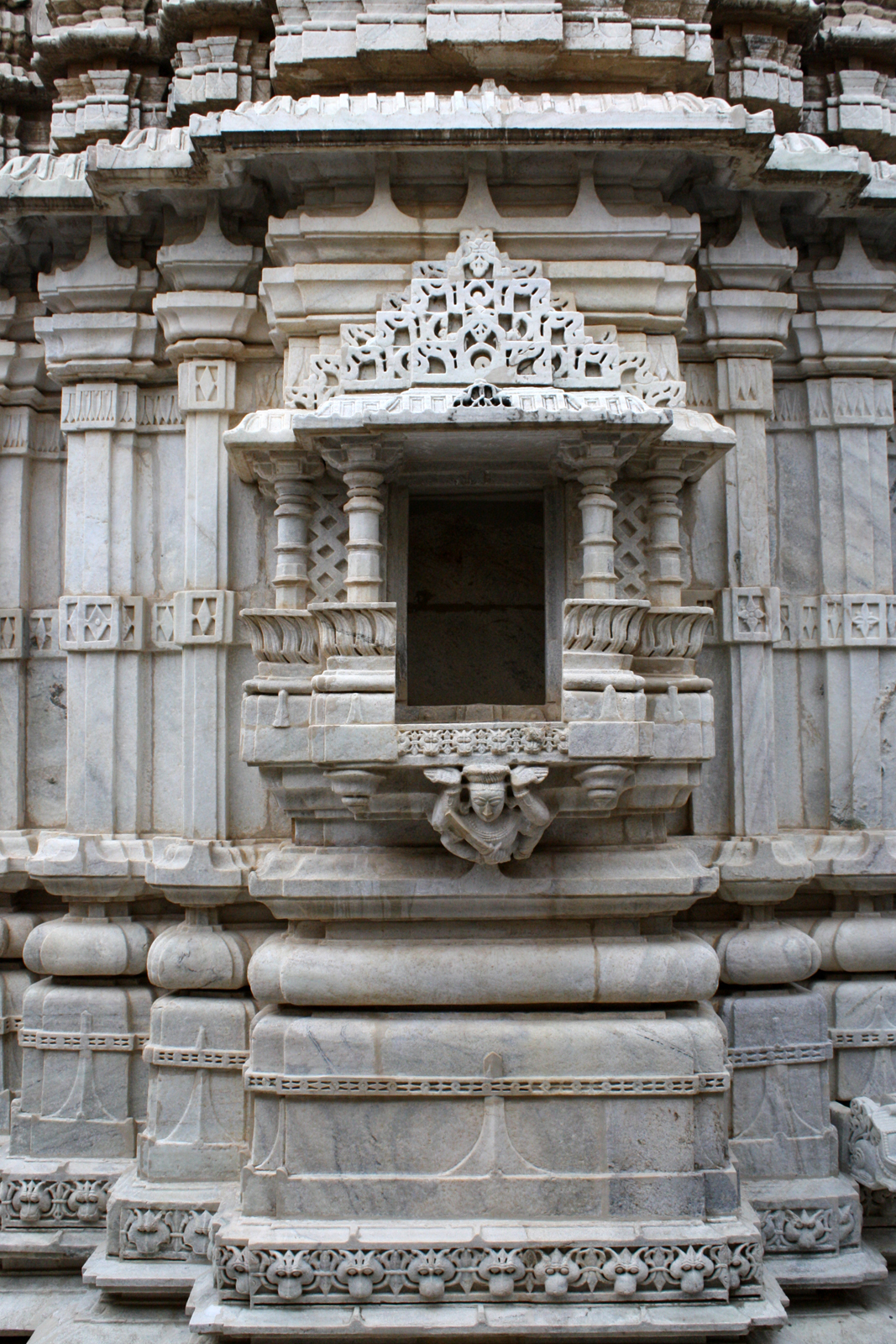
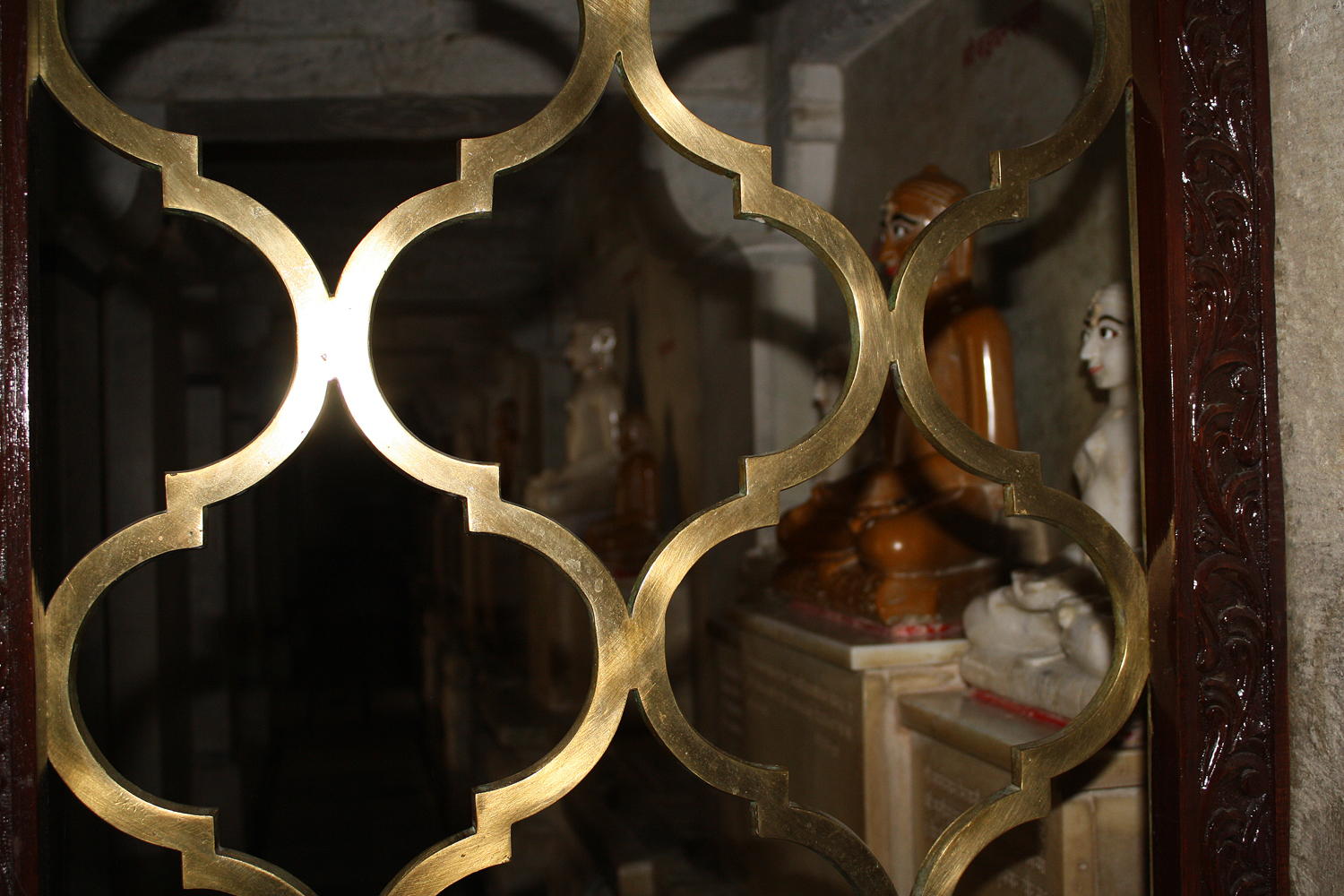
| A dholak drummer and dancers. | An elaborate relief figure. | Another architectural gem. | Along walls are statues of buddhas and saints. | As enticing gallery. | The wheel of temples in the four directions. |
|
|
 |
 |
 |
 |
 |
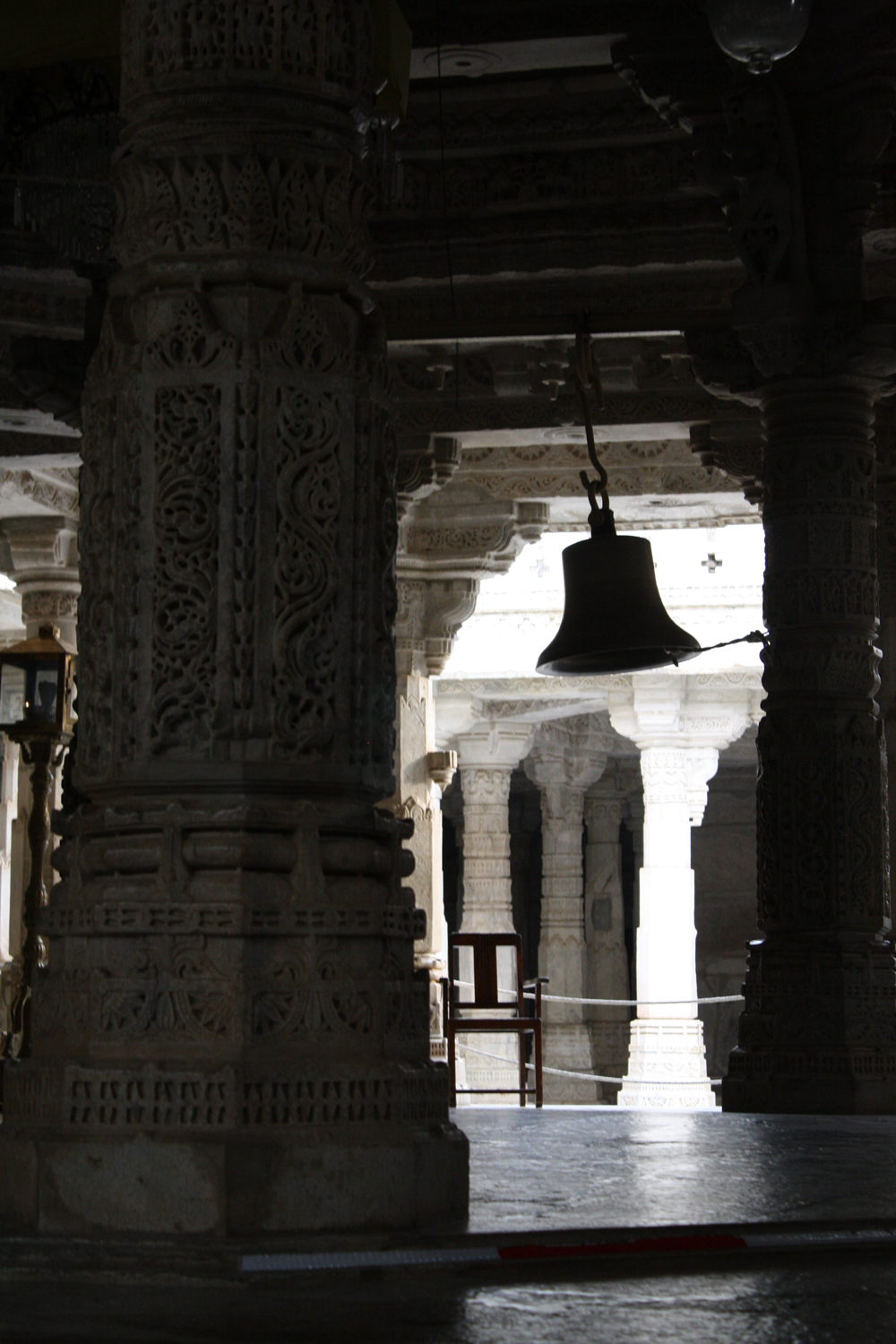
| The visitor provides scale. | The power of the temple grows with each new view. | A meditative figure. | Wonders of carving at every turn. | The Jains also use a bell in worship. | Inner sanctum. |
 |
 |
 |
 |
 |
 |
| Another amazing dome. | The supporting square. | Roof line. The temple is open to the air. | Elephant, people, elaborate decoration. | Mountain and temple. | Flowers prepared for offerings. |
|
|


