 |
 |
 |
 |
 |
 |
|
This statue of the deity Ganesha welcomes us. He is a humorous, good-nature god but has a mischievous side. |
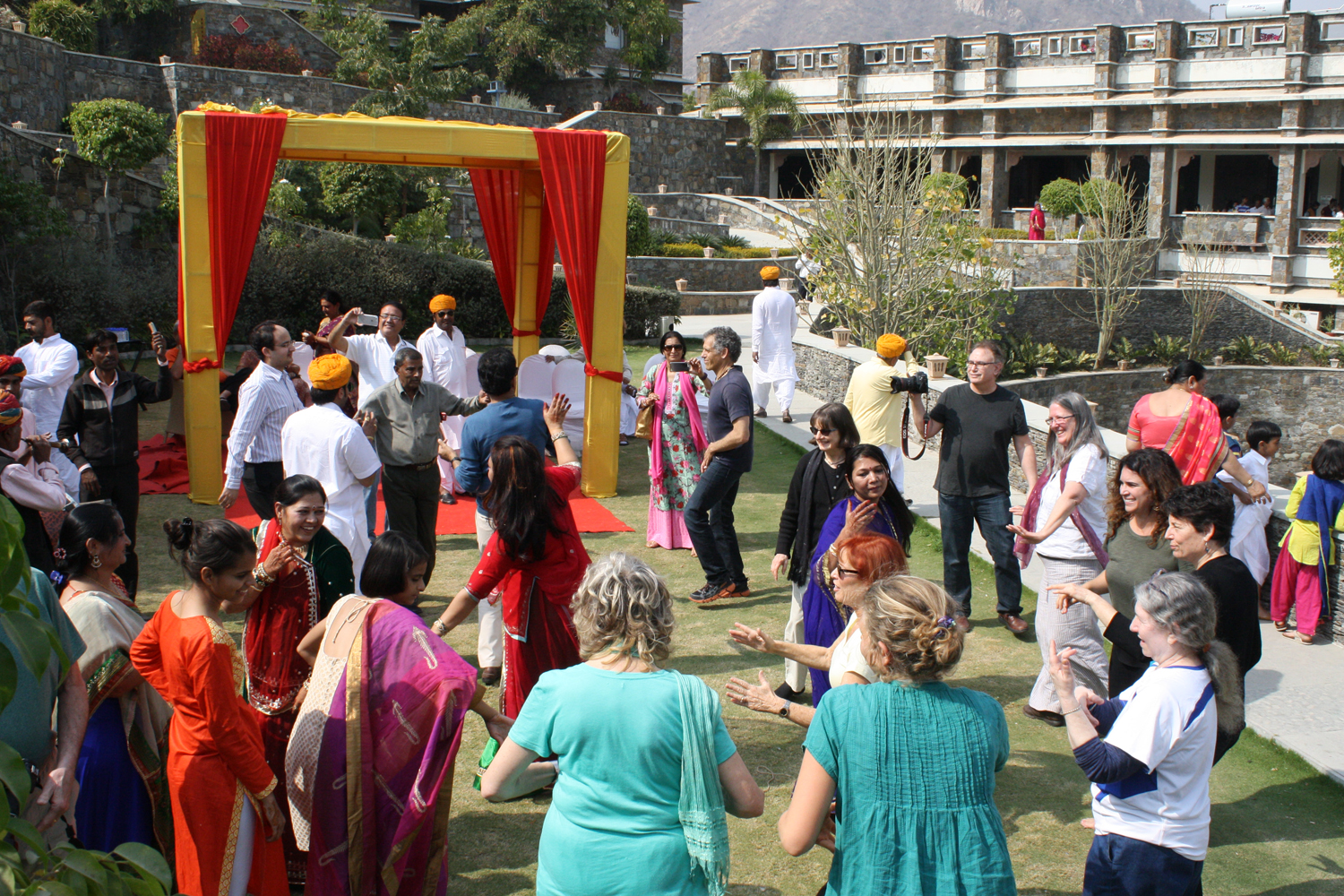
My room was located high and far from the lobby and dining room. Looking toward the city. at 5 a.m., the Muslim call to prayer is heard in the distance, followed elsewhere by Hindu bhajan morning devotional singing. | An imposing old fort stands guard above Udaipur. | In the morning we hear exciting music outside and behold a wedding canopy and musicians plays a dhol drum and a folk oboe, shehnai. | Everyone dances, wedding guests and tour members. | The powerful rhythms cannot be resisted. |
|
|
|
 |
 |
 |
 |
|
Sajida's husband is Shye Ben-Tzur, an Israeli musician who has lived in India for decades. His Nonesuch album Junun, featuring Rajasthani musicians, is a world music hit. |
Shye presented a very fine introduction to Indian classical music, playing the bansuri flute in demonstration. While my 50 years of listening to and studying Indian music made me already well familiar with the form and concepts, his lecture and performance were excellent. |
Yuval plays the harmonium during the performance. |
In the evening, we go into the older part of the city. |
The gate to the old city. |
We ascend the steps of this Hindu temple to experience evening puja, with mantra singing, fierce bell ringing, Brahmins with fire purification, and crowds of worshippers. [credit: Andrea Vasconcellos] |
|
|
|
 |
 |
 |
|
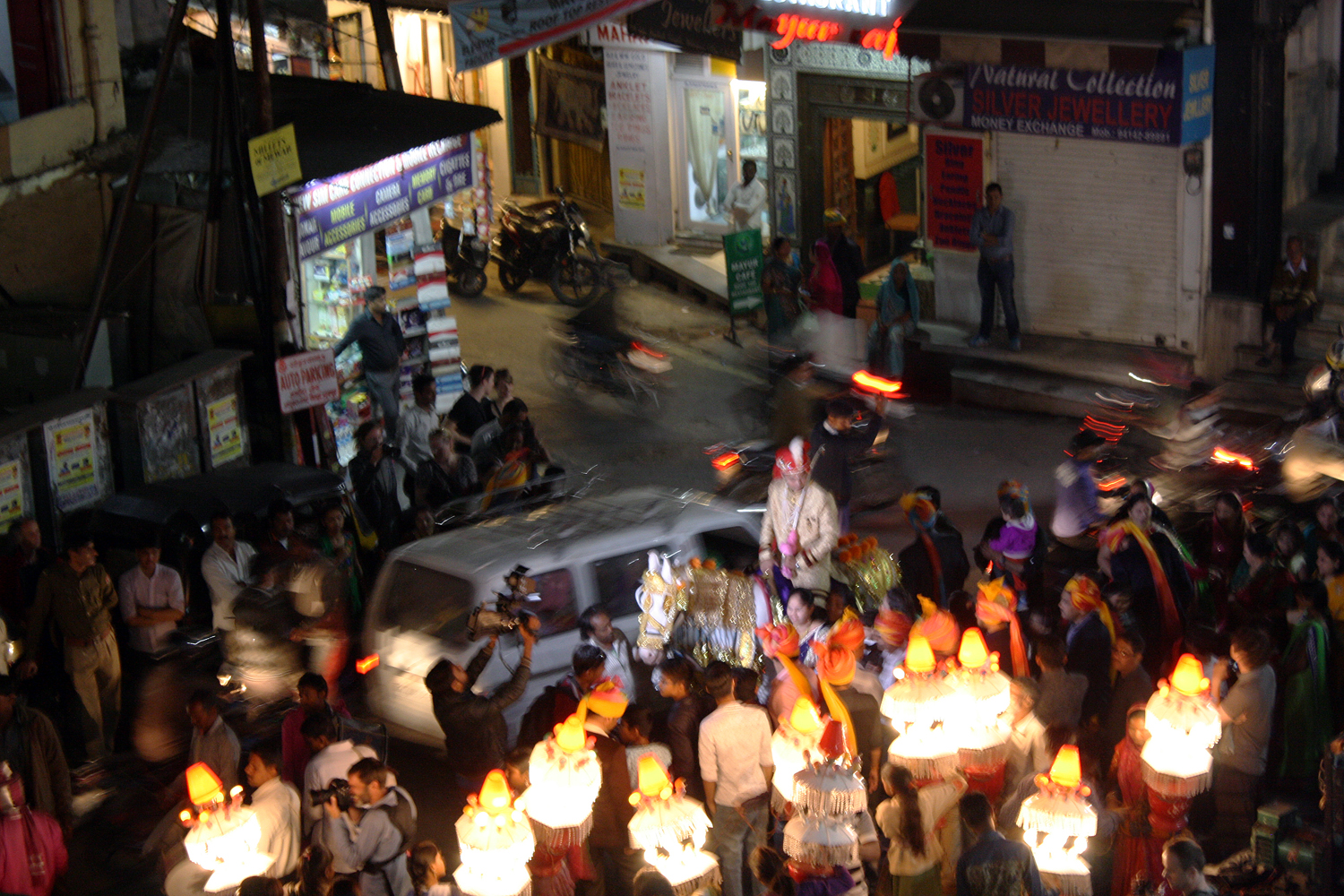
| February is wedding month, as dictated by astrology, and we hear and see many such events. Here, the groom arrives on his steed. | On our return, we encountered a bevy of very friendly school girls on their own excursion [credit: Andrea Vasconcellos]. | The next morning we come to Lake Pichola. Guide Lee. | We don life vests and enter the tour boats. | The lake is lined with old palaces converted into hotels and lodges. | The palaces were built over many decades. |
 |
 |
 |
 |
 |
 |
| The following series of images offers architectural details, ancient and comparatively more modern, as the boats move counter-clockwise along the lake edge . . . | . . . | . . . | . . . | . . . | . . . |
 |
 |
 |
 |
 |
 |
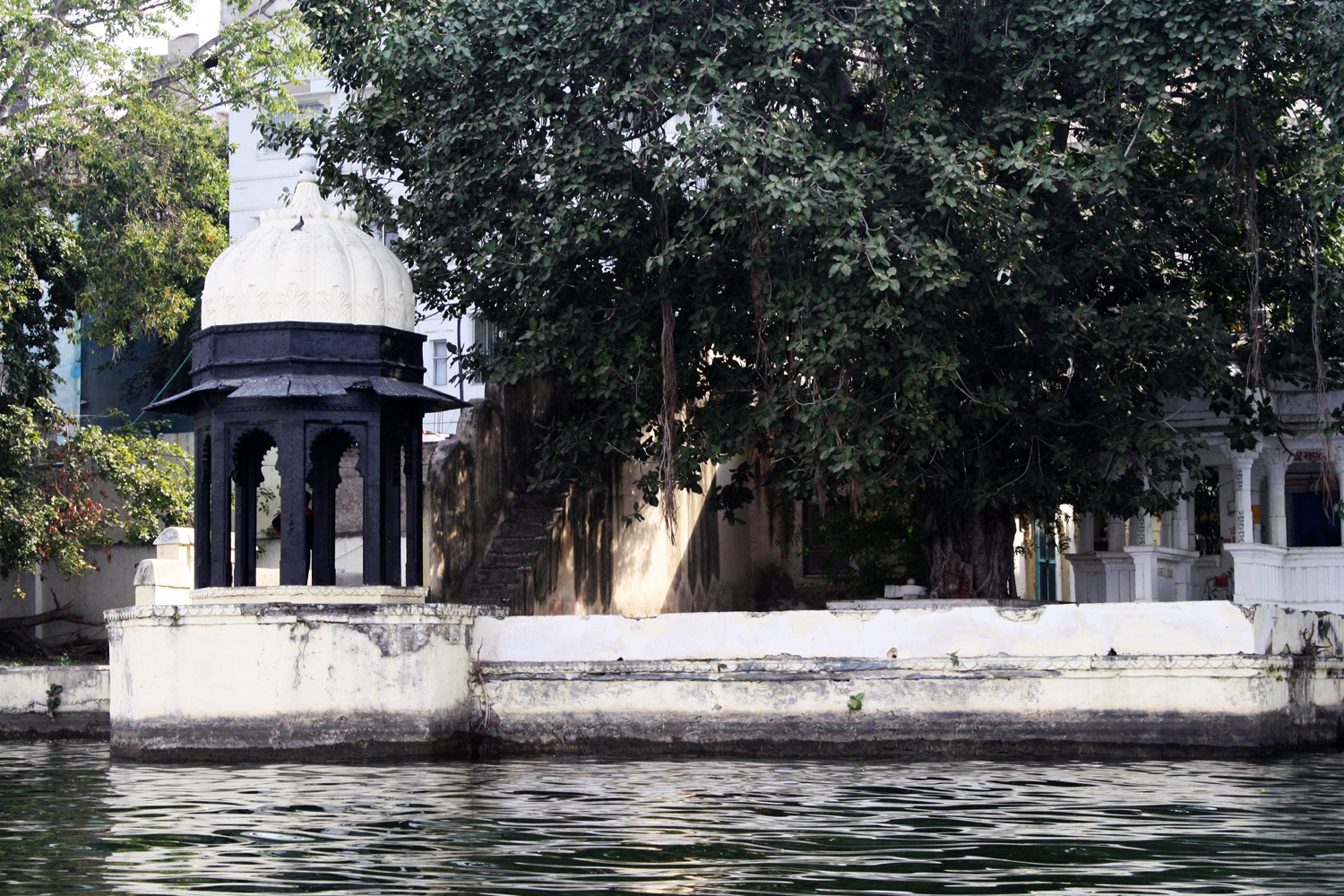
| . . .I am interested in architecture . . . | Monkeys have made a home here. | A bridge seen before in different light. | The water-edge gazebo/pavilions are welcoming. | . . . | The island palace elephants welcome us. |
 |
|
 |
 |
 |
|
| The plaza. | A cafe, cool and quiet. | Indian elegance. | More of this entertainment palace. | Back on terra firma, we next visit the Maharajah Palace and Museum. | The entrance way has our friend Ganesha. The swastika is a root symbol of all Hindi words and in Buddhism it represents the dharma wheel. |
 |
 |
 |
 |
 |
 |
| A repeating form. | Rich interior. [We were not permitted to bring in cameras but were allowed to keep phones that had built-in cameras! Indian illogic, hence credit Andrea Vasconcellos] | A variety of gridwork patterns.[credit: Andrea Vasconcellos] | A fantastic peacock.[credit: Andrea Vasconcellos] | In the late afternoon, we have a surprise: a visit to the temporary home of a puppeteer family of the Romani Bhat tribe. We are greeted by bankiya horn and dhol drum. | The stage is set with some cast members awaiting. |
 |
 |
 |
 |
 |
 |
| Life-sized puppets on the hillside advertise the art. | Young members of the troupe; dholak double-headed drum. | Bankiya trumpets. | More puppets. | Two soldiers in synch. I find it interesting that the puppet master vocalizes with the same shrill device used in English Punch & Judy shows. | A rider with flaming weapons. |
 |
 |
 |
 |
||
| Silan becomes part of the show. | A confrontation. | The puppet heads are made of wood. Demonstration of preparation. | Another demonstration of puppet making. | ||
|
|




 <
<