 Music: Agua y Fuego [Maimonides
/ Eduardo Paniagu, Jorge Rozemblusm / Pneuma, 3 min excerpt]
Euro-Arabo Classical
Music: Agua y Fuego [Maimonides
/ Eduardo Paniagu, Jorge Rozemblusm / Pneuma, 3 min excerpt]
Euro-Arabo ClassicalCORDOBA
Photographs and Commentary by Debra Jan Bibel
Music: Agua y Fuego [Maimonides
/ Eduardo Paniagu, Jorge Rozemblusm / Pneuma, 3 min excerpt]
Euro-Arabo Classical
Viewing / Copying/ Saving/ Sending/ Printing
Clicking on the small photographs will cause an enlargement of the image to appear. I have sized them to 7 inches wide/high. In order to copy, 'save as', email, or print these images for your own use, right-click your mouse and choose from the pop-up menu.
On to Cordoba in our bus driven by Reuben, a taciturn and patient professional who was assigned for our entire tour. On the way, we stopped for lunch at a quaint village, Puerto Lapice, dedicated to Cervantes's Don Quixote, as this area in La Mancha was his inspiration. [I do not normally eat red meat, but I must admit that the stewed lamb dish, washed down with beer, was extraordinarily tender and delicious, and on a hot day, the beer was particularly refreshing.] Headquartered at Hotel Los Gallos, we dine at the hotel and afterwards hear Yuval discuss the origins of the oud and how it and Judeo-Arabic music came to Andalusia. The next morning began a full plunge into history with a tour of the Jewish Quarter, the huge converted mosque, now cathedral, and a special visit to the Casa de Sefard, a private library and cultural center dedicated to the history of Jews in Spain, passionately directed by Sebastián de la Obra, of Converso heritage.
|
|
|
|
|
|
|
|
A village in La Mancha, a place for lunch. |
Iconic sculpture of the Don; but is that Sancho Panza beside him? | Grounds of the restaurant. | Old village church. | Dispense with the dog? Metaphorically, for condemned prisoners of the past. | Cliffs of the lethal plunge. |
|
|
|
 |
 |
 |
 |
|
Hotel dinner toast. |
The other side of the table. |
Yuval discusses the oud. |
The oud discusses Yuval. |
Bridge protector. |
|
|
|
|
 |
 |
 |
 |
| The Jewish Quarter, alcazar, and cathedral/mosque. | Enrique, our guide, ponders a question. | Ornate wall facing Alcazar. | A different view. | The size of the mosque becomes apparent. | Archeological dig: Visigoth and Roman levels beneath. |
|
|||||
 |
 |
 |
 |
 |
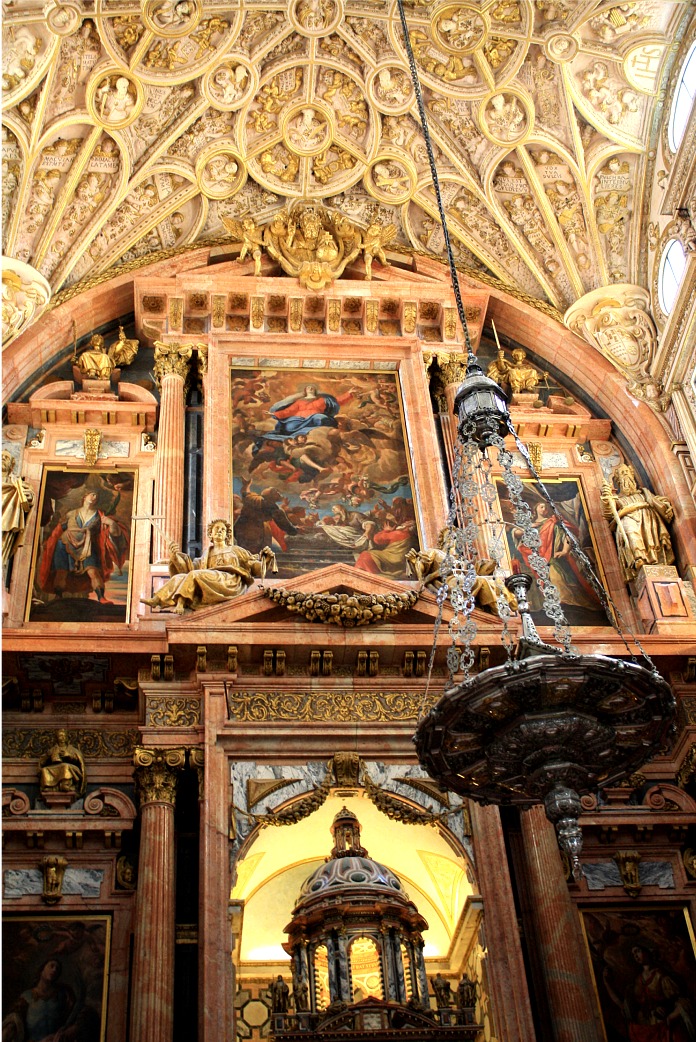 |
| Vastness of the mosque. | Non sequitur: the edge of Christian portion.. | Double arches provide architectural support. |
Advanced Islamic architecture. |
An adjacent niche. |
Looking to Christian heaven. |
 |
 |
 |
 |
 |
 |
|
The columns are all different, with filler rising to the level arch base, |
Rubbing impressions of column mason signings. | Detail of signings; note difference in letters of same word, Allah. | This is a depiction of Maimonides. | The statue is Moses ben Maimon. | This is Ernesto. |
|
|
|||||
 |
 |
 |
 |
 |
 |
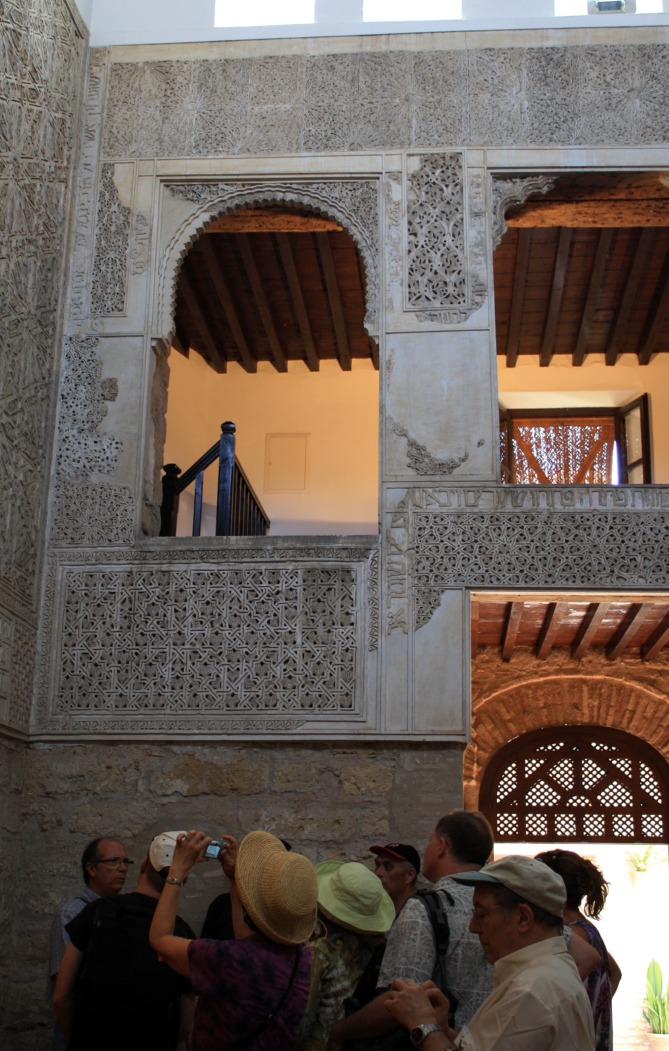
| A wonderful doorway. | Hebrew and arabesques. | Diffused light from above: how Frank Lloyd Wright! | The altar. | Upstairs for women; in Islam, women to the back or sides. | Decorative arch. |
 |
 |
 |
 |
 |
 |
| A museum in order to remember. | Sebastiàn and his assistant in the library. | Earliest document of the Inquisition in the collection. | Explaining the effects of fear, distrust, and intolerance. | Instruments of Sefarad. | Arabian instruments of old Spain. |
 |
 |
 |
 |
 |
|
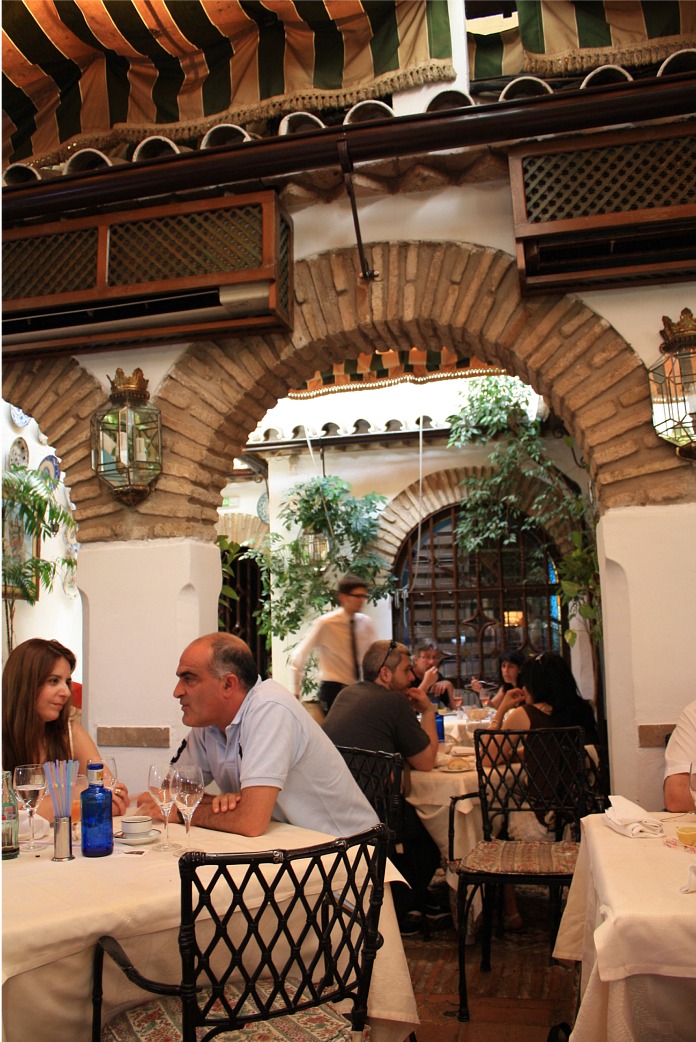
| At El Churrasco for lunch. | Bonnie, Dinah, and Michael: a happy trio after a splendid meal. | Garden of the Alcazar. | Modern garden extension. | Near the Alcazar of the kings. | |
 |
 |
||||
| Roman geometric mosaic at the Alcazar reception hall. | Roman geometric design anticipating arabesques. | ||||


